Workshop Trails: Mapping Blackjack Table Fabrication Across Regional Specialists
Vera Reed · Oct 5, 2026
Workshop Trails: Mapping Blackjack Table Fabrication Across Regional Specialists
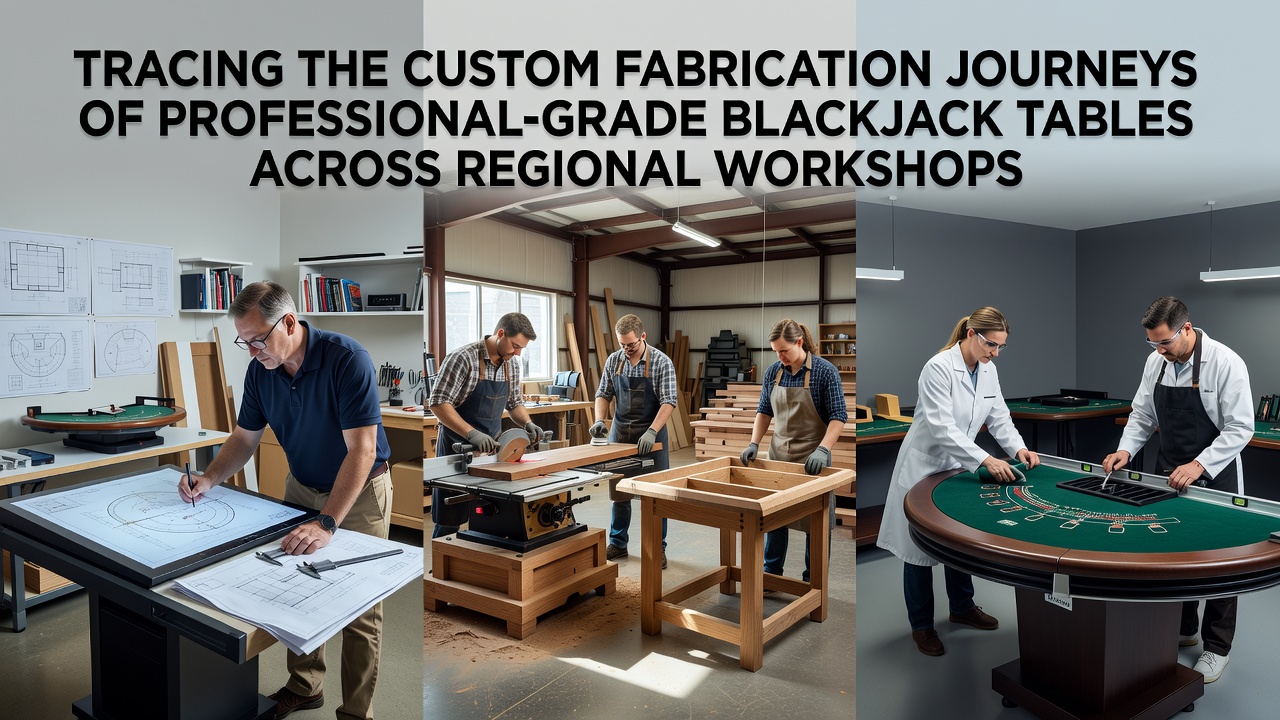
Regional workshops handle distinct stages in the creation of professional-grade blackjack tables, from initial frame construction in Midwest facilities to surface finishing operations along the West Coast. Data from industry reports show that these distributed processes allow specialists to focus on materials and techniques suited to local resources and expertise, while final assembly often occurs at centralized sites near major casino markets. According to figures from the American Gaming Association, table game installations increased notably in the first three quarters of 2026, with custom orders driving much of the activity.
Frame Construction in Heartland Facilities
Workshops in states such as Illinois and Indiana begin with kiln-dried hardwoods selected for stability under varying humidity levels common in casino environments. Workers cut and join components using precision jigs that maintain tolerances within one millimeter across table lengths measuring 72 to 96 inches. These facilities coordinate with suppliers for reinforced steel brackets that support the weight of multiple players and dealers during extended shifts. One Midwest operation completed 120 frames for East Coast clients by early October 2026, integrating cutouts for electronic shuffling devices required under updated gaming regulations.
Surface Preparation and Regional Material Sourcing
Facilities along the Pacific Northwest receive these frames and apply layered substrates designed to resist warping from heavy felt coverings. Suppliers in the region provide composite panels treated with moisture barriers, while Canadian mills contribute specialized edging strips that align with international durability standards. Research from the University of Nevada, Reno gaming laboratory indicates that properly prepared surfaces extend table lifespan by 18 to 24 months compared with untreated alternatives. Technicians route channels for embedded sensors that track bet placements, a feature now standard in many properties.
Finishing Stages and Cross-Continent Coordination
European workshops, particularly those in Portugal and Spain, receive partially completed units for felt application and rail padding. Workers stretch and staple precision-cut fabrics using pneumatic tools calibrated to avoid creases that could affect card movement. These sites also install padded armrests wrapped in vinyl compounds meeting fire-retardant specifications set by multiple jurisdictions. Shipments from North American frame builders arrive monthly, allowing continuous production lines that delivered 85 completed tables to Asian operators during the third quarter of 2026.
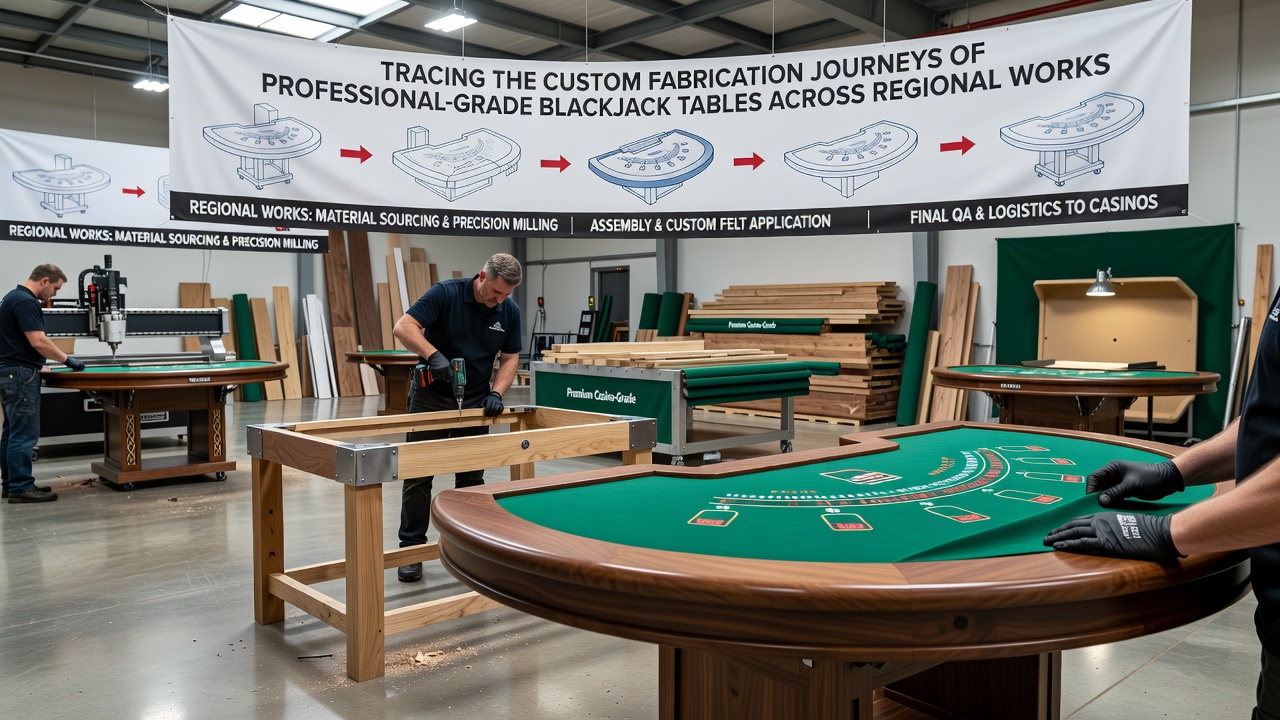
Quality checks occur at each transfer point, with inspectors documenting dimensions, material certifications, and compliance markings before units proceed to the next stage. Observers note that this segmented approach reduces shipping costs while concentrating specialized labor where it adds the most value.
Integration of Technology and Final Assembly
Workshops in Nevada and New Jersey handle the final integration of dealer stations, chip trays, and signage mounts. Technicians connect power conduits for LED lighting systems that illuminate playing surfaces without glare, following specifications outlined in manufacturer guidelines. These locations also perform stress testing that simulates years of use within accelerated cycles, verifying that joints and surfaces maintain integrity under repeated loads. Figures released by the Nevada Gaming Control Board show that certified tables must pass 14 separate inspections before deployment on casino floors.
Conclusion
The fabrication journeys of professional blackjack tables continue to rely on coordinated efforts among regional specialists who each contribute targeted expertise at specific production phases. Supply chains documented in 2026 demonstrate consistent movement of components across multiple time zones, supported by standardized quality protocols and material certifications. This distributed model supports both large-scale casino expansions and smaller venue upgrades while maintaining the structural and functional requirements demanded by regulatory bodies worldwide.